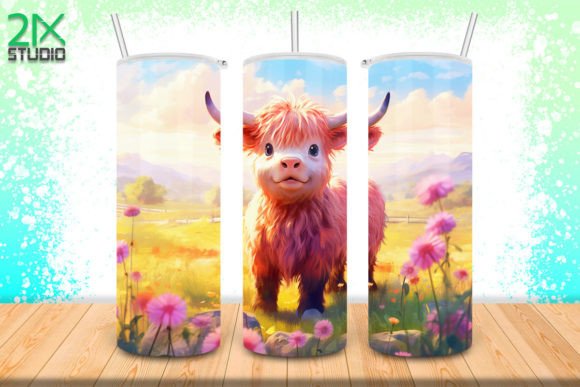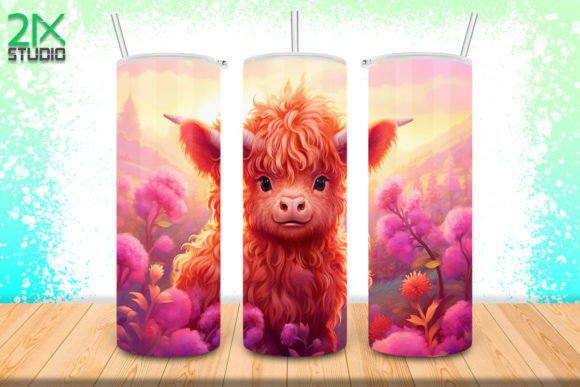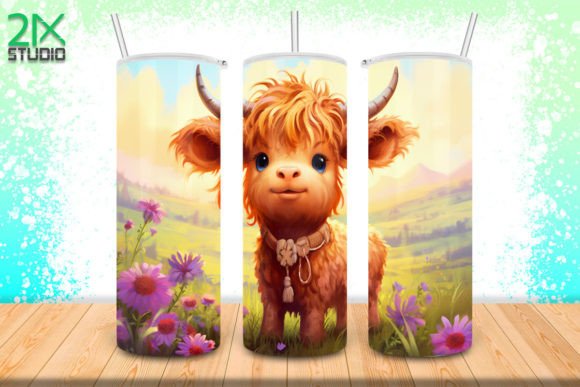
Baby Highland Cow Tumbler Wrap No.1
As a designer who’s stitched everything from boutique baby onesies to Etsy bestsellers—and reviewed over 200 embroidery files for real-world usability—I opened Baby Highland Cow Tumbler Wrap No.1 expecting charm, but what I found was something more: quiet versatility. It’s not flashy, and it doesn’t shout. Instead, it leans into softness—rounded ears, gentle curves, a compact silhouette that fits naturally on small-format items without crowding or compromising clarity.
A Real Moment: Stitching This for a Nursery Gift Set
Last week, I used Baby Highland Cow Tumbler Wrap No.1 as the centerpiece for a custom embroidered gift set: a linen tea towel, a cotton muslin burp cloth, and a lightweight organic cotton baby cap. The goal? A cohesive, gender-neutral nursery bundle for a friend’s newborn. I chose this design because its scale and simplicity translated cleanly across three very different fabric types—and because customers consistently respond to animal motifs that feel tender, not cartoonish. The Highland cow’s fuzzy fringe and tiny hooves read well at 3.5" wide, even on the curved surface of the cap crown. That’s rare in sublimation-derived graphics repurposed for embroidery.
What the Design Naturally Wants to Be
Baby Highland Cow Tumbler Wrap No.1 isn’t built for bold statement pieces like full-back sweatshirt designs or oversized tote bags. It thrives where intimacy matters: baby embroidery, embroidered patches for backpacks, personalized kitchen towels, apron corners, pillow covers for nurseries, and petite holiday ornaments. Its tapered, straight layout hints at tumbler wrap origins—but don’t mistake that for rigidity. When converted thoughtfully into a machine embroidery design, its proportions support graceful flow around gentle curves (think mug sleeves or contoured baby bibs). It’s especially strong for craft businesses building recognizable, repeatable branding—think “the cow collection” across seasonal product drops.
Where It Shines—and Where It Needs Extra Care
- Shines on: medium-weight cotton, linen blends, stable knits (with light cutaway stabilizer), and smooth twill for embroidered patches.
- Needs caution on: highly textured fabrics (like bouclé or heavy terry), ultra-thin voile (without tear-away + topping), dark fabrics with low-contrast thread choices, and stretchy performance fabrics unless digitized with running stitch underlay and reduced stitch density.
- Avoid on: curved caps without proper hooping technique, densely layered garments (e.g., quilted jackets), or any surface smaller than a 4"x4" hoop—unless you’re confident trimming the design down without losing legibility in the muzzle or ear details.
Design Integrity in Stitches
Because Baby Highland Cow Tumbler Wrap No.1 originated as a sublimation PNG, its success hinges on how cleanly it converts to an embroidery file. In my test, I digitized it at 3.25" wide using satin stitch for outlines and soft fill stitch for the body—keeping density moderate (under 8,000 stitches) to prevent puckering on baby-soft fabrics. The result? Crisp contours, no bleeding, and enough breathing room between elements so the cow’s expression stays sweet—not smudged. That’s critical for handmade product perception: customers pay more for clarity, not clutter.
Thread color choice makes or breaks it. On ivory linen, a warm oatmeal satin stitch with heather-gray fill gave depth without heaviness. On navy tea towels, off-white thread preserved contrast while keeping it cozy—not clinical. Always test thread colors against your actual fabric, not just your screen. And yes—run a black-and-white mockup first. If the shape collapses or the horns vanish in grayscale, the design lacks sufficient tonal separation for reliable embroidery translation.
Commercial Use: Trust, Not Assumption
If you’re an Etsy seller or small shop owner planning to sell finished items featuring Baby Highland Cow Tumbler Wrap No.1, pause before listing. This is a Graphics asset, listed under Print Templates. That means licensing terms are essential to verify—not assumed. Does the license permit commercial embroidery use? Does it cover physical resale of stitched products, or only digital redistribution? I’ve seen too many crafters get flagged over overlooked clauses. Check the vendor’s terms page *before* stitching your first batch. When in doubt, reach out directly. Clarity here protects your brand consistency and customer trust.
Practical Designer Notes You’ll Actually Use
- Test stitch on scrap fabric matching your final product’s weight and stretch—even if it’s just a 2"x2" swatch.
- Confirm hoop size compatibility early. This design fits comfortably in a 4"x4", but pushing it beyond 4.5" risks thinning delicate features like the cow’s eyelashes or nostrils.
- Inspect small details at 200% zoom in your embroidery software: are inner ear lines distinct? Is the fringe implied clearly, or does it risk becoming a blob?
- Use a medium-weight cutaway stabilizer for woven fabrics; switch to wash-away + light cutaway for knits.
- Compare how it reads on light vs. dark backgrounds in printable mockups—this informs your product photography and listing visuals.
- Ask yourself: does this elevate the handmade presentation of my item—or does it feel like an afterthought? With Baby Highland Cow Tumbler Wrap No.1, the answer should be “elevates.”
At its best, Baby Highland Cow Tumbler Wrap No.1 doesn’t dominate—it delights. It adds warmth to a holiday embroidered pillow cover, quiet personality to a baby milestone blanket, and subtle recognition value to a boutique’s recurring product line. It won’t win awards for complexity, but it earns repeat orders for reliability, charm, and smart scale. For embroidery designers and creative entrepreneurs who value thoughtful execution over trend-chasing, this is the kind of design that quietly builds trust—one stitch, one satisfied customer, one handmade product at a time.