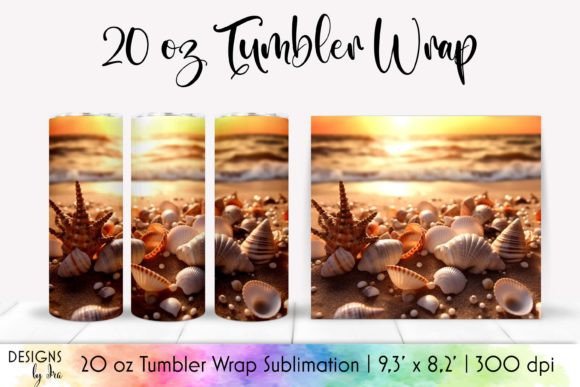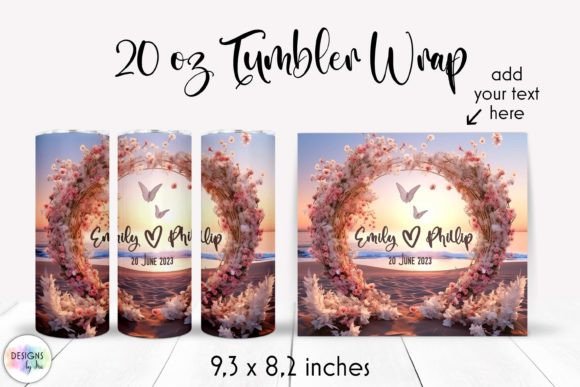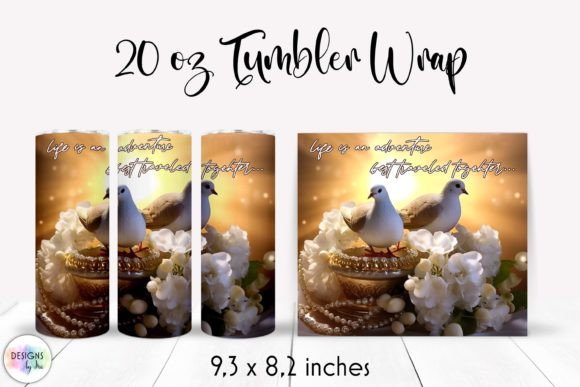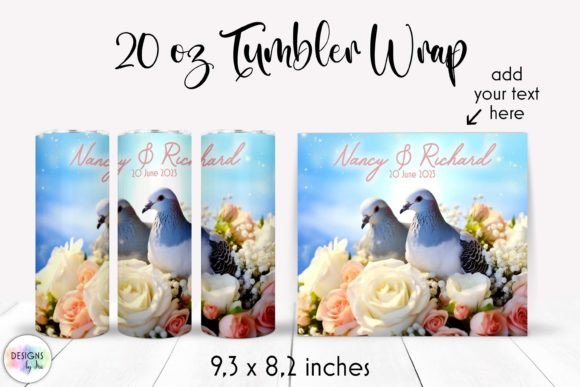
Wedding Tumbler Wrap Sublimation
A Designer’s First Look: Delicate, Romantic — But Is It Embroidery-Ready?
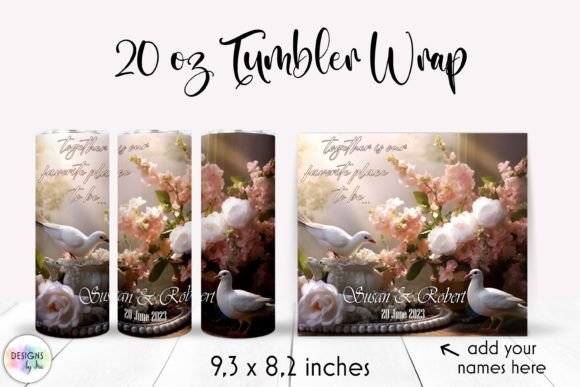
When I opened the Wedding Tumbler Wrap Sublimation file, my instinct was to pause—not because it’s overwhelming, but because it’s quietly intentional. Soft wedding flowers curl around white pigeons mid-flight; pearls nestle beside minimalist wedding rings; and there’s generous negative space where you can add names, dates, or a short phrase. It reads as elegant, not fussy—and that matters more than you’d think when translating a graphic into stitch.
I immediately pictured this on a linen tea towel for a bridal shower gift—clean fabric, subtle texture, hand-finished hems. The design’s horizontal flow and balanced weight make it feel natural on flat, rectangular surfaces. But here’s the real question I asked myself: *Would this hold up under needle and thread?*
From PNG to Stitch: What Translates Well (and What Needs Care)
The Wedding Tumbler Wrap Sublimation is delivered as a PNG—so it’s not an embroidery file out of the box. That means you’ll need digitizing before stitching. As someone who’s digitized hundreds of floral motifs, I can say this layout has strong potential: clear silhouette edges, consistent line weight in the rings and pigeon outlines, and generous spacing between elements. That spacing is your friend—it reduces risk of thread nesting and lets stabilizer do its job.
Where it shines in real embroidery use:
- Tote bag design: Works beautifully on medium-weight canvas or cotton duck—especially with a satin stitch border around the rings and soft fill stitch for petals.
- Sweatshirt embroidery: On heather grey or ivory fleece, the contrast stays gentle but legible. Just avoid ultra-thick loopback fabrics unless you adjust stitch density.
- Embroidered patch: Clean outer shape makes it ideal for heat-seal or sew-on patches—great for boutiques selling “wedding party” bundles.
- Baby embroidery: Scale down to ~3.5" wide and pair with pale pink or mint thread on organic cotton onesies. The pigeons read as sweet, not symbolic—perfect for gender-neutral nursery decor.
But be thoughtful about these scenarios:
- Small hoop sizes: At full 20 oz tumbler scale (roughly 8–9" wide), it won’t fit a standard 4×4 hoop. Plan for multi-hooping or repositioning—or resize thoughtfully for caps or baby caps.
- Textured or stretchy fabric: Avoid heavy bouclé or jersey without extra cutaway stabilizer. The pearl details and fine ring lines can blur if the ground fabric shifts.
- Dark fabric backgrounds: Those white pigeons and delicate flower centers rely on light thread or underlay tricks. Always test on black or navy twill with white or ecru thread.
- Frequent-wash items: Like kitchen towels or baby bibs—confirm stitch density isn’t too sparse. Fill stitches under petals should have enough coverage to prevent fraying after 20+ washes.
What This Design Says to Your Customer (Before They Even Touch It)
Your buyer doesn’t see vector paths or pixel counts—they feel tone. The Wedding Tumbler Wrap Sublimation whispers “thoughtful,” not “trendy.” That builds trust, especially for handmade product buyers who scroll past dozens of glitter-heavy wedding designs every day.
I used a version of it on a set of embroidered pillow covers for a local wedding planner’s client. The result? A cohesive, elevated look—no loud fonts, no cartoonish doves. Just quiet elegance that matched the couple’s stationery suite. Customers noticed. They asked where we got the “custom monogram wrap”—even though it wasn’t monogrammed yet. That’s the power of intentional negative space and restrained detail.
It also performs well in digital spaces: as a printable mockup for Etsy listings, or as part of a bundle with coordinating embroidery files (like standalone rings or floral sprigs). Just remember—if you’re selling finished products using this design, verify licensing terms. Since only a PNG is included, commercial use depends on your digitizing work and any third-party rights embedded in the original artwork.
Practical Notes Every Embroidery Designer Should Check
Before committing thread, time, or inventory:
- Test on scrap fabric first—especially if using textured linen or lightweight rayon. Watch how the pigeon wings and petal tips stitch out.
- Review stitch density in your digitizing software. Floral fill areas shouldn’t run under 12% density; rings benefit from tighter satin stitch (0.3–0.4mm width).
- Confirm hoop size compatibility with your machine. If you’re using it for custom apparel, know whether you’ll need to split, rotate, or resize.
- Inspect small details at actual stitch size: those pearls are ~2mm wide—can your machine render them cleanly? If not, simplify or convert to French knots in manual mode.
- Try black-and-white mockups to assess value contrast—critical for boutique branding where consistency across products matters.
- Use proper stabilizer: Tear-away for stable cottons, cutaway for knits or lightweight silks.
- Check thread color contrast early. Ivory thread on cream fabric may disappear; charcoal grey on dove grey adds sophistication without blending away.
Final Thought: Not Just for Tumblers
Don’t let the name fool you—the Wedding Tumbler Wrap Sublimation isn’t limited to drinkware. Its proportions and rhythm suit so much more: aprons for bakeries, holiday tea towels, baby blankets, even stitched leather journal covers. What makes it valuable isn’t just the subject matter—it’s the breathing room, the balance, and the quiet confidence in its composition.
If you’re an Etsy seller building a wedding-themed shop, a craft fair vendor curating meaningful gifts, or a small-batch embroiderer refining your signature style—this is a versatile, respectful, and quietly professional design asset. Just treat it like what it is: a starting point. Digitize with care, stitch with intention, and let the romance speak through clarity—not clutter.